Mobile Billboard vs Static Billboard: The ROI Showdown
Billboard advertising remains one of the most effective ways to build brand awareness. However, the category has evolved well beyond the traditional roadside poster. Today, advertisers have a real choice: stick with a static billboard in a fixed location or put their message on the move with a mobile billboard.
Therefore, both formats have strengths. But when it comes to return on investment, flexibility and measurable results, the gap between the two is widening fast. In this guide, we break down the key differences between mobile billboards and static billboards using real campaign data, so you can decide which format works harder for your budget.
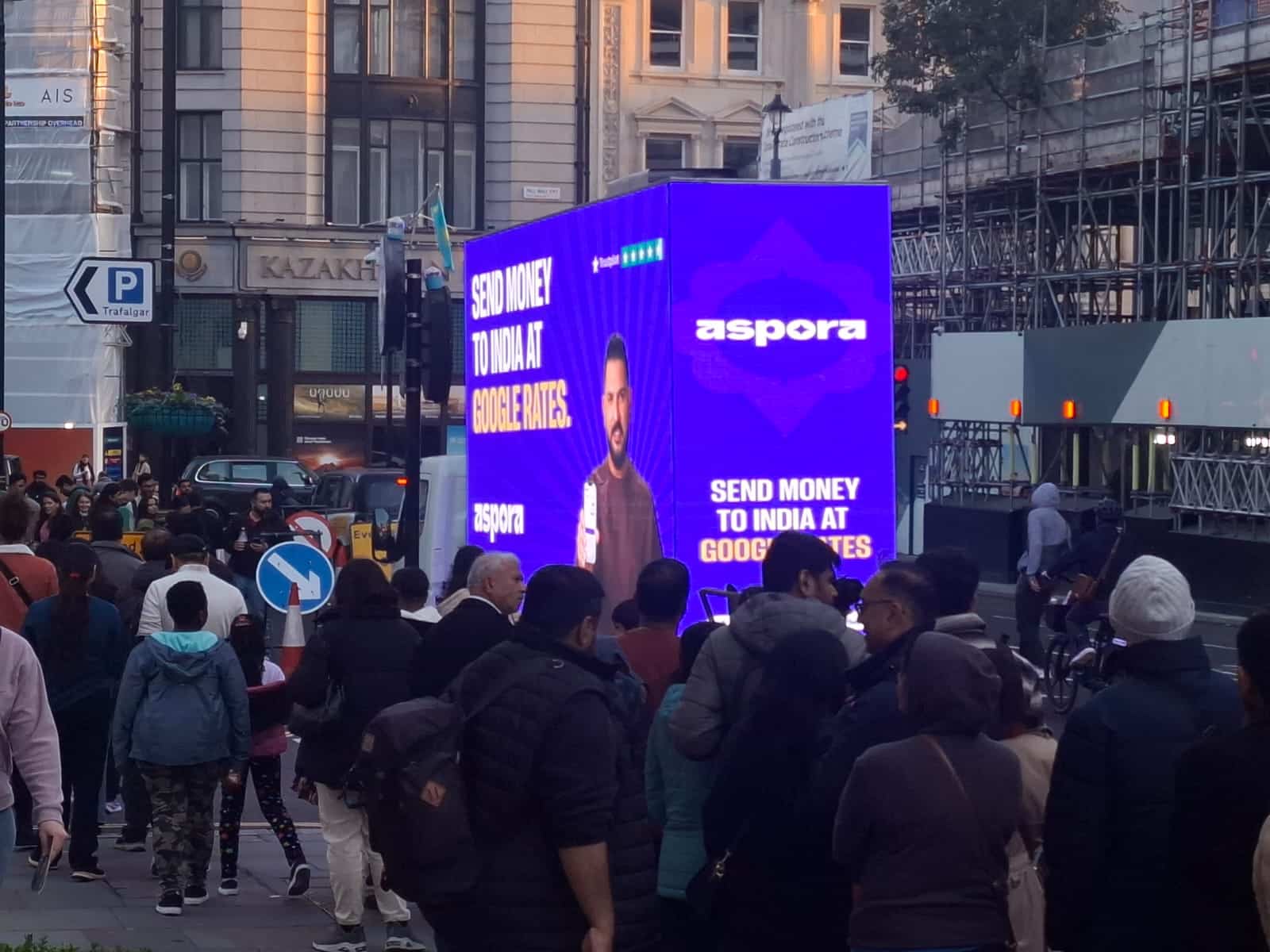
What Is a Mobile Billboard?
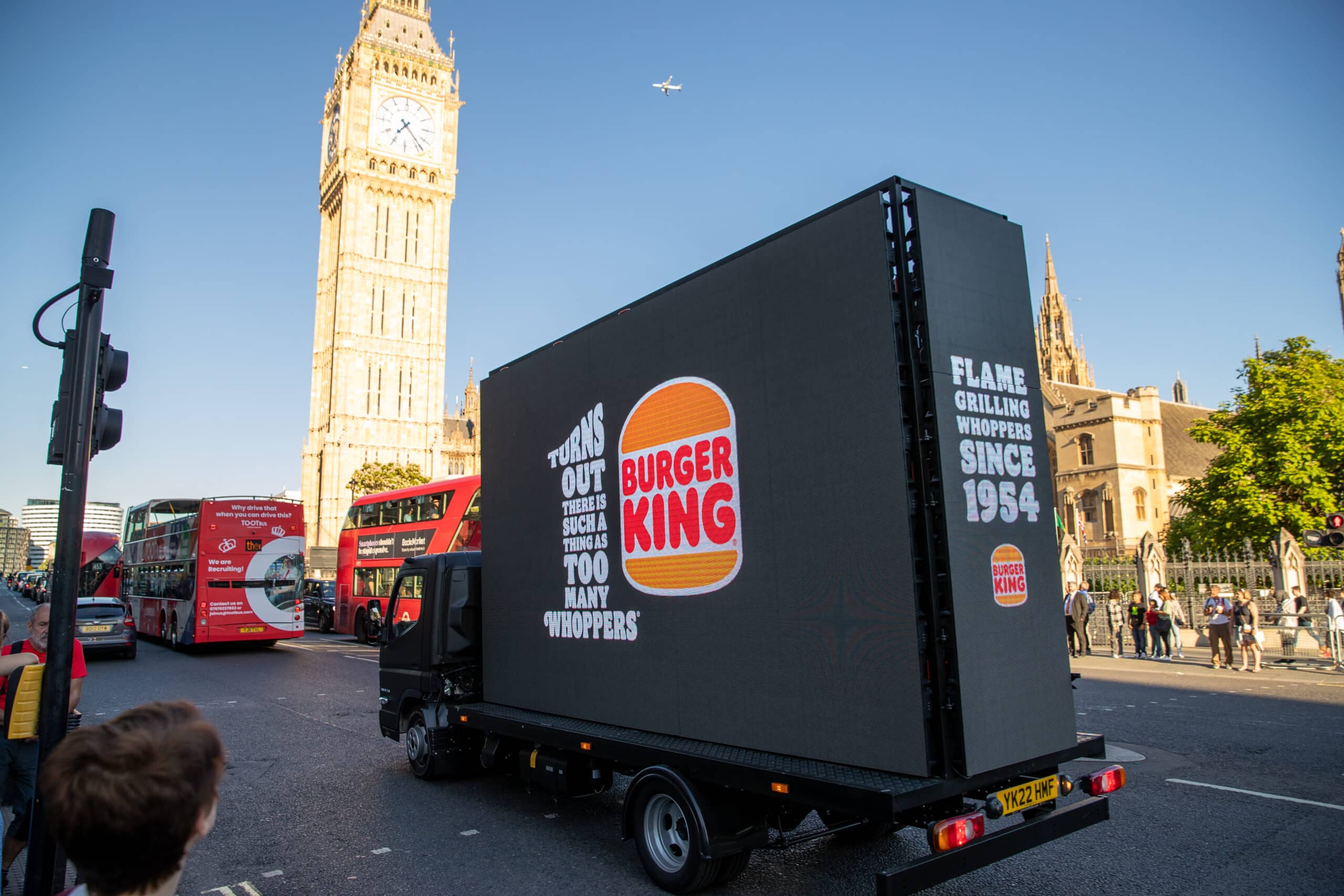
A mobile billboard is a large-format digital or printed advertising screen mounted on a vehicle. This could be a Digital AdVan (a van fitted with high-resolution LED advertising screens up to 35sqm) or an advertising bike (a compact, attention-grabbing digital display on custom adbike).
Unlike a static billboard, the display moves through streets, past events, through city centres and along planned GPS routes. Thus, it provides the advertiser with full control over where and when the message appears and allows for change of creative content in real-time.
What Is a Static Billboard?
A static billboard is a fixed advertising panel installed at a roadside location, shopping centre or transport hub. Meanwhile, the advertiser books a specific site for a set period (typically two weeks) and displays a single printed image or in the case of digital out of home (DOOH) screens, a rotating digital slot shared with other advertisers.
As a result, static billboards offer broad reach in high traffic locations, but the advertiser has no control over who sees the ad or when.
Head-to-Head Comparison: Mobile Billboard vs Static Billboard
| Factor | Mobile Billboard | Static Billboard |
|---|---|---|
| Cost | From £999/day (full ownership of display). | £500 to £2,000+ for 2 weeks (fixed location, often shared rotation). |
| Location Flexibility | Unlimited. change routes, cities, even countries. | One fixed site for the booking period. |
| Targeting | GPS-planned routes to specific postcodes, events, venues. | Relies on general traffic passing the site. |
| Impressions | Moves through multiple high footfall areas per day. | Dependent on traffic at one location. |
| Measurement | GPS tracking, time stamped photos, video proof of exposure. | Limited. Estimated traffic counts, no proof of actual views. |
| Speed to Launch | Same day launch possible. Upload content and go. | 2 to 4 weeks for production, printing and installation. |
| Creative | Digital content updated instantly. Run multiple creatives per day. | One printed image for the full booking period. |
| Dwell Time | High. Vehicle moves at pedestrian pace or parks at key spots. | Varies. Drivers pass at speed, pedestrians may linger. |
How Audience Behaviour Is Changing Outdoor Advertising
Outdoor advertising once depended on predictable commuter routines and stable daily traffic patterns. However, audience behaviour has changed significantly in recent years. Hybrid work, flexible schedules and experience-led lifestyles now influence how people move through cities.
As a result, a single billboard location no longer guarantees consistent exposure to the same audience. Footfall rises and falls depending on events, weather conditions, retail trends and seasonal activity. Static placements still generate visibility, yet they cannot respond when audience movement shifts.
Mobile billboards address this challenge directly. Instead of waiting for audiences to pass a fixed site, campaigns follow real-world movement patterns. For example, routes can target commuter peaks in the morning, retail districts at lunchtime and entertainment zones in the evening.
Consequently, advertisers achieve wider coverage without increasing spend. The campaign reaches audiences where they actively spend time rather than where traffic was historically estimated. Therefore, flexibility has become a defining factor in modern out of home advertising performance.
Visibility vs Location: Why Movement Creates Attention
Traditionally, billboard buying focused on securing a premium location. However, visibility depends on more than placement alone.
Drivers often pass roadside billboards quickly, which limits viewing time. In addition, competing signage, traffic conditions and environmental distractions reduce attention even in busy areas. High traffic numbers do not always translate into meaningful engagement.
Mobile billboards improve visibility by combining movement with intentional positioning. Campaign operators can adjust routes throughout the day and place displays where audiences naturally slow down.
For instance, teams can:
- Drive at pedestrian-friendly speeds in dense areas.
- Pause near retail entrances or event queues.
- Circulate high footfall zones repeatedly.
- Align routes with peak audience hours.
Thus, advertisers do not simply rent space. Instead, they actively create attention opportunities, which increases message recall and campaign effectiveness.
Where Mobile Billboards Win on ROI
1. You Only Pay for Your Audience
A static billboard sits in one place and hopes the right people walk or drive past. However, a mobile billboard goes directly to where your audience is. Planning a product launch in Shoreditch? Route the Advertising Van through the exact streets your customers live and work on. Targeting football fans? Park outside the stadium on match day.
Consequently, this precision targeting means less wasted spend and more relevant impressions per pound.
2. Real Campaign Data Backs It Up
We do not deal in estimates. Therefore, here are results from real Mobile Billboards campaigns:
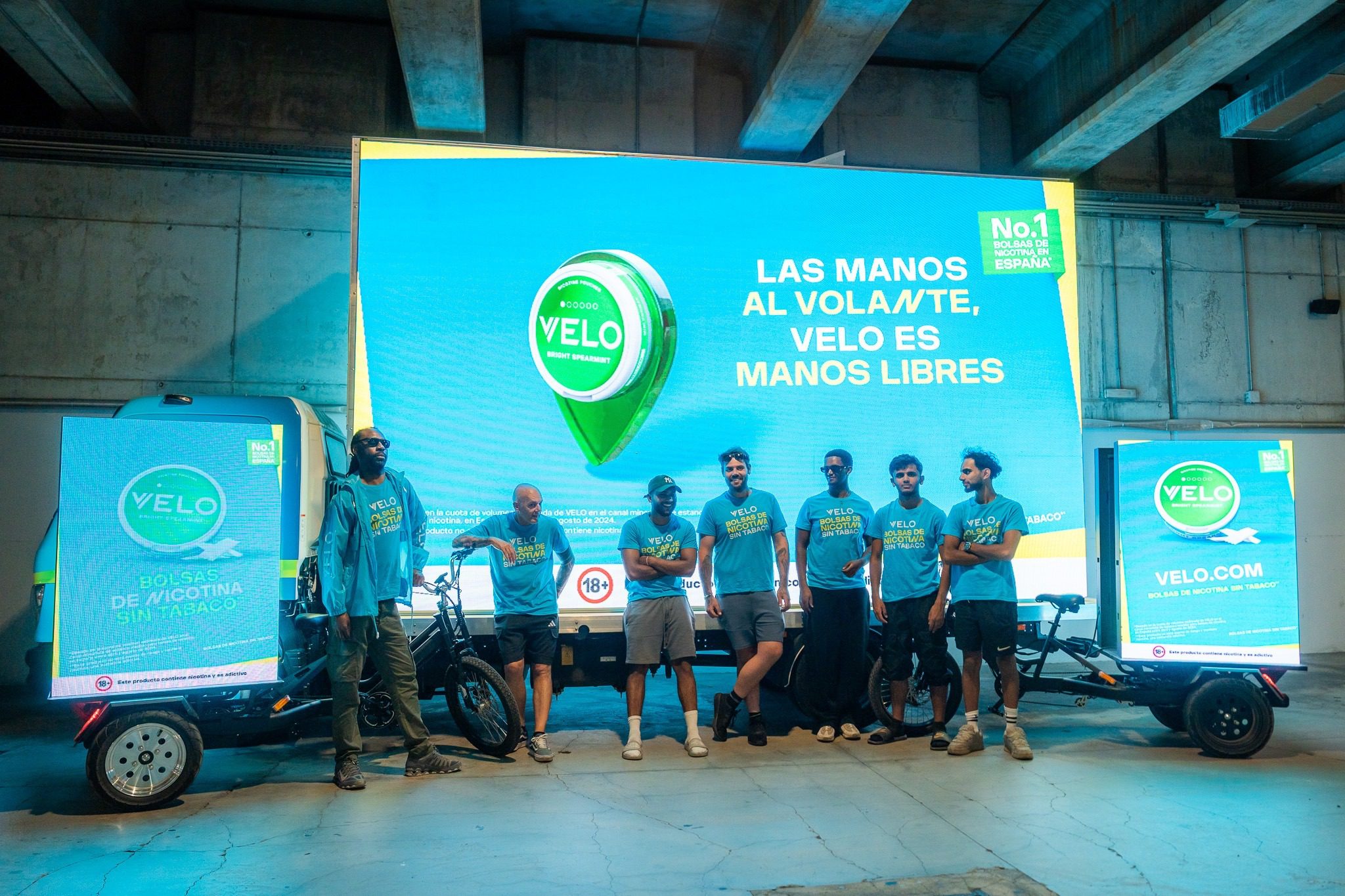
- Velo x McLaren F1 (Barcelona): A digital AdVan campaign across Barcelona city centre generated between 780,000 and 2.02 million impressions. The ad van moved through fan zones, key streets and event areas. Thus, reaching audiences a static advertising board near the circuit could never have touched.
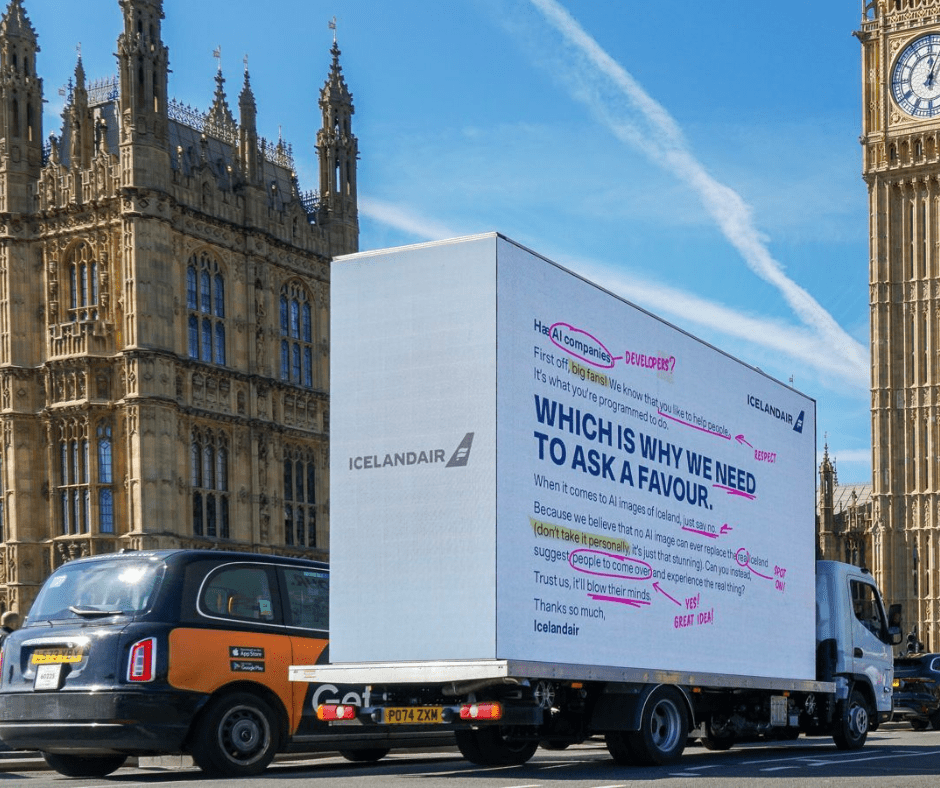
- Icelandair (London and Dublin): A multicity AdVan campaign delivered 400,000 to 800,000 impressions across two capital cities. One booking, two cities, full GPS tracking on every route. On the other hand, a static billboard would have required separate site bookings in each city at significantly higher cost.
- Nike RunTown (London): Two advertising bikes operating around Oxford Circus for a single day delivered 30,000 to 60,000 impressions. Thus, the bikes navigated pedestrianised zones and side streets that no van or static billboard could access.
3. Flexibility Means Lower Risk
With a static billboard, you commit to one location for the full booking period. If footfall drops because of weather, roadworks or a shifted event schedule, your investment is stuck.
Meanwhile, mobile billboards adapt in real time. Rain forecast in one area? Reroute to a covered shopping district. Event cancelled? Redirect to another high footfall zone. Content not landing? Swap the creative on the digital screen within minutes.
Thus, flexibility dramatically reduces campaign risk and protects your ROI.
4. Measurable Results, Not Guesswork
One of the biggest weaknesses of static billboards is measurement. Advertisers receive estimated traffic counts based on historical data, but there is no way to confirm how many people actually looked at the ad.
Mobile billboard campaigns from Mobile Billboards include:
- Full GPS route logs showing exactly where the display travelled.
- Timestamped photos from every key location.
- Video footage of the display in action.
- Impression estimates based on actual footfall data for each route.
Thus, this proof-of-exposure reporting means you can show stakeholders exactly what they got for their money.
5. Speed to Market
Static billboard campaigns typically require 2 to 4 weeks of lead time. You need to book the site, produce the printed vinyl, schedule installation and hope nothing delays the process.
However, with a digital mobile billboard, same-day launches are possible. Upload your message or visuals on the screen remotely, confirm the route, and the campaign is live. Moreover, this speed is invaluable for reactive marketing, product drops, event activations and time-sensitive promotions.
The Psychology Behind Moving Advertising
Human attention naturally responds to motion. In busy urban environments filled with competing visuals, movement signals something new and encourages people to look again. Static billboards attract strong attention initially. However, frequent commuters quickly become familiar with fixed placements, and over time the creative blends into the background environment. Mobile billboards prevent this effect. Because the display appears in different locations throughout the day, audiences experience repeated exposure without visual fatigue.
This creates several advantages:
- First, pattern disruption. Movement interrupts routine visual surroundings and captures attention more effectively.
- Second, perceived immediacy. Audiences often associate mobile advertising with live events or limited-time campaigns, which increases memorability.
- Third, social amplification. Eye-catching mobile displays frequently appear in photos and videos shared online, extending campaign reach beyond physical impressions.
Therefore, mobility strengthens engagement as well as geographic reach.
Campaign Types That Benefit Most From Mobile Billboards
Both formats support brand awareness. However, certain campaign goals benefit more from mobility and flexibility.
- Product launches require rapid awareness across multiple districts. Mobile routes allow brands to build momentum quickly during critical release periods.
- Event activations gain visibility exactly where audiences gather. Brands can position displays outside venues before and after peak attendance times.
- Retail promotions perform better when campaigns target active shopping streets instead of relying on general roadside exposure.
- Short-term campaigns benefit from fast deployment and adjustable scheduling.
- Emerging brands often choose mobile billboards to achieve citywide visibility without committing to long term placements.
As a result, advertisers concentrate exposure where it produces the greatest impact.
When Static Billboards Still Make Sense
To be fair, static billboards are not without merit. They work well when:
- You want a permanent brand presence in one high traffic location (motorway junctions, city centre intersections).
- Your campaign runs for months and consistency matters more than flexibility.
- You are building long term local awareness in a specific postcode.
However, for campaigns where ROI, targeting, speed and accountability matter most, mobile billboard advertising consistently outperform.
Cost Breakdown: What Does the Budget Actually Buy?
Here is a realistic comparison of what your money gets with each format:
Static billboard at £1,500 for 2 weeks:
- One site, one image, estimated impressions based on historical traffic data.
- No proof of actual views.
- No ability to change creative content or location.
- 2 to 4 weeks to go live.
Mobile billboard (Digital AdVan) at £999/day:
- 35sqm high-resolution LED screen, fully wrapped in your brand.
- GPS-planned route through multiple high footfall areas.
- Real time content changes (run different messages in the morning and evening if you want)
- Full GPS tracking, photos and video proof of exposure.
- Same day launches available.
Therefore, on a pure cost-per-verified-impression basis, the mobile billboard delivers significantly better value because every impression is backed by route data and visual proof.
Understanding the Hidden Costs of Static Billboard Campaigns
The advertised price of a static billboard usually reflects media placement only. However, additional costs often appear throughout the campaign process. Advertisers frequently pay for creative production, large-format printing and installation logistics. Furthermore, any creative update requires reprinting and manual replacement, which increases both cost and lead time. Most bookings also include minimum durations. Therefore, if campaign priorities change or performance underdelivers, advertisers cannot easily adjust placement or messaging.
Mobile billboard campaigns simplify this process. Digital displays remove printing requirements, while flexible routing allows campaigns to adapt without restarting bookings. Consequently, the real cost comparison extends beyond headline pricing and includes operational efficiency and reduced risk.
Sustainability and the Shift Toward Digital Outdoor Media
Sustainability increasingly influences advertising decisions. Brands now evaluate environmental impact alongside campaign performance.
Traditional static billboards rely on printed vinyl materials that often get replaced after short booking periods. Although recycling options exist, production and disposal still consume resources.
Digital mobile billboards reduce waste because advertisers update creative content electronically. A single display can run multiple campaigns without physical production. Additionally, advertising bikes provide a low-emission solution for urban campaigns while accessing pedestrian areas unavailable to static billboards.
Thus, the advertising format itself can support broader sustainability goals while maintaining strong visibility.
Choosing the Right Mobile Billboard Format
Mobile Billboards offers two core display advertising services, each suited to different campaign goals:
Digital AdVan
The flagship format. A 33sqm or 35sqm LED screen mounted on a van that drives planned routes through cities. In addition, it is ideal for large-scale brand awareness, product launches and event activations. Hence, the sheer size of the display commands attention on any street.
Learn more about Digital AdVan advertising
Advertising Bike
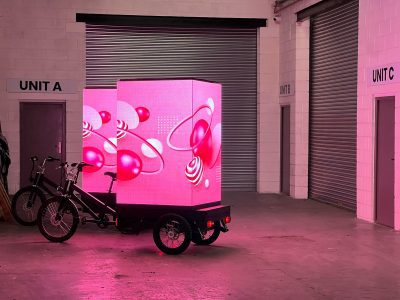
A compact digital display mounted on a custom build compact bikes. In addition, it is perfect for targeting pedestrian zones, festivals, high streets and areas where static billboards cannot reach. For example, the Nike RunTown campaign proved that two bikes at Oxford Circus can deliver tens of thousands of impressions in a single day.
Learn more about Advertising Bike campaigns
Integrating Mobile Billboards Into a Modern Media Strategy
Mobile billboards work most effectively as part of an integrated media strategy rather than a standalone channel. Many brands combine formats to achieve different objectives simultaneously. Static billboards provide consistent long-term presence, while mobile campaigns deliver targeted exposure during key campaign moments.
For example, a brand may maintain a permanent roadside placement while deploying mobile advertising during launches, promotions or major events. Meanwhile, digital and social channels amplify street-level exposure. This balanced approach allows marketing teams to maintain consistency while adapting messaging as campaign priorities evolve.
Measuring ROI Beyond Impression Numbers
Impressions remain an important metric. However, modern marketers increasingly evaluate performance using broader indicators.
Mobile billboard reporting supports deeper analysis, including:
- Geographic coverage achieved.
- Exposure frequency across routes.
- Time-of-day performance insights.
- Visual proof of delivery.
- Engagement generated through social sharing.
Because campaigns include documented routes and verified exposure, advertisers gain clearer accountability. Consequently, teams can demonstrate campaign value more confidently and optimise future planning decisions.
Frequently Asked Questions
How many impressions does a mobile billboard generate per day?
It depends on the route and location. In a busy city centre, a Digital AdVan typically generates tens of thousands to hundreds of thousands of impressions per day. For instance, our Icelandair campaign averaged 400,000 to 800,000 impressions across the full booking, while two Nike advertising bikes hit 30,000 to 60,000 in a single day around Oxford Circus.
Is a mobile billboard more expensive than a static billboard?
On a headline rate, a mobile billboard day rate (from £999) may look higher than a static billboard two-week booking (£500 to £2,000). Moreover, the mobile format includes GPS tracking, proof of exposure, full ownership of the screen (no shared rotation) and the ability to target specific areas. Hence, when you compare cost per verified impression, mobile advertising often delivers better value.
Can I run a mobile billboard campaign in multiple cities?
Yes. One of the biggest advantages of mobile billboards is multicity capability. For example, our Icelandair campaign ran across both London and Dublin with a single booking. Hence, the AdVan drives to the next city on the schedule.
How quickly can a mobile billboard campaign launch?
Same day launches are possible with digital formats. Therefore, once your content is uploaded and the routes are confirmed, the campaign can go live immediately. On the other hand, static billboards typically need 2 to 4 weeks for production and installation.
How do you measure mobile billboard effectiveness?
Every Mobile Billboards campaign includes GPS route tracking, time-stamped location photos, video proof and impression estimates based on actual footfall data for each area covered. Thus, it gives advertisers clear, verifiable proof of exposure that static billboards cannot match.
The Future of Billboard Advertising
Outdoor advertising continues to evolve toward data-driven and flexible formats. Advertisers increasingly expect measurable performance, faster deployment and adaptable creative execution. Emerging trends include programmatic digital out of home advertising, real-time creative updates and data-informed route optimisation.
Mobile billboards align naturally with these developments. They combine the scale of traditional outdoor media with the responsiveness of digital marketing channels. Therefore, as brands prioritise accountability and agility, mobile formats will likely play an increasingly important role within future media strategies.
The Verdict: Mobile Billboard ROI Wins
Despite its shortcoming, static billboards still have a role in the media mix, particularly for long term brand presence in fixed locations. However, for campaigns where ROI, flexibility, targeting and measurement matter, mobile billboards are the stronger choice.
Therefore, with real campaign data showing hundreds of thousands to millions of impressions, GPS-verified routes, same-day launch capability and the ability to change creative content on the fly, mobile billboards give advertisers something static advertising boards cannot: control, proof, and performance.
Ready to see what a mobile billboard campaign could deliver for your brand?
Explore Digital AdVan Advertising | Explore Advertising Bike Campaigns