Out of home advertising is evolving fast. For decades, the traditional billboard was the only real option for brands wanting to reach people on the street. But in 2026, there’s a serious challenger: the digital ad van.
If you’re planning an outdoor campaign this year, you’ve probably asked yourself the same question every marketing manager is asking: should I book a static billboard or invest in a digital advertising van?
Both formats put your brand in front of real people in real locations. But that’s where the similarities end. The cost structures are different. The reach is different. The creative possibilities are on another level. And the way you measure results couldn’t be further apart.
In this guide, we’ll break down the digital ad van vs traditional billboard debate across every metric that matters: cost, reach, targeting, content, measurement, and overall impact. By the end, you’ll know exactly which format fits your campaign goals and budget.
What Is a Digital Ad Van?
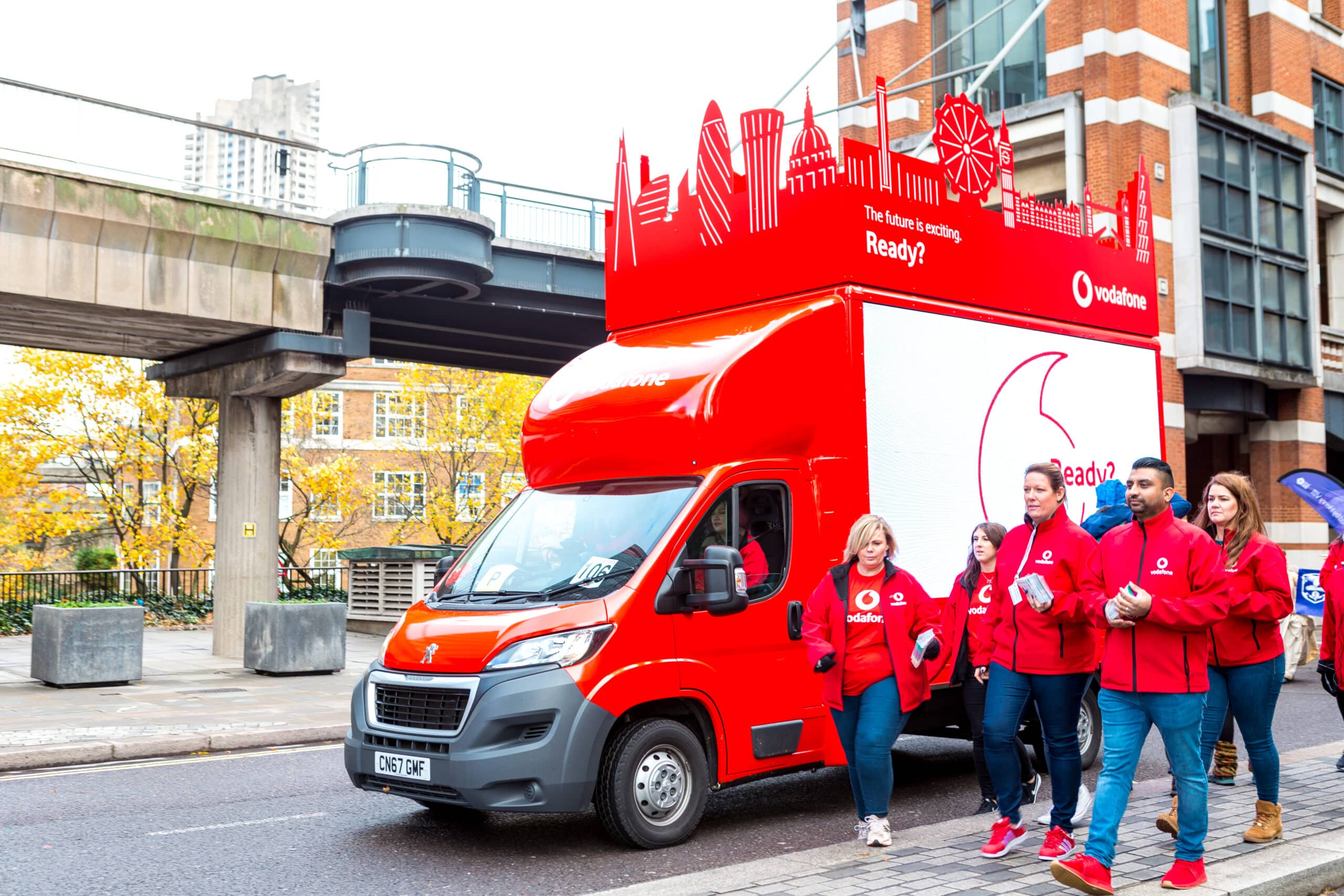
A digital ad van (sometimes called a digital advertising van or LED ad van) is a large vehicle fitted with high resolution LED screens that display your advert as the van drives a planned route through your target area.
Think of it as a giant mobile TV screen on wheels. The screens are bright enough to be seen clearly in daylight, and they’re capable of displaying full-motion video, animation, and even anamorphic 3D content that stops people in their tracks.
At Mobile Billboards, our flagship is the 35sqm Digital AdVan, one of the largest mobile LED screens operating in the UK. Both units deliver stunning visual quality across dual screens (one on each side of the vehicle).
How does a digital ad van work?
- Route planning: You choose the areas, streets, and postcodes you want to target. We plan an optimised route to maximise exposure.
- Content upload: Your video, animation, or static creative is loaded onto the van’s media system. You can run multiple creatives and swap them mid-campaign.
- Live deployment: The van drives the agreed route at slow speeds through high-footfall areas, retail zones, event locations, or wherever your audience is.
- Tracking and reporting: GPS tracking logs the entire route. You receive a full proof-of-execution (POE) pack with photos, video, and route data after every campaign day.
The key advantage? Mobility. Your advert isn’t stuck in one place. It goes where your audience goes.
What Is a Traditional Billboard?
Traditional billboard advertising is the format most people picture when they think of outdoor ads. A large printed poster (usually a 48-sheet or 96-sheet) is mounted on a fixed roadside structure. Drivers and pedestrians see it as they pass by.
Common billboard formats in the UK
- 48-sheet: The standard large-format billboard (roughly 6m x 3m). Found along main roads, retail parks, and town centres.
- 96-sheet: Double the size of a 48-sheet. Often used on motorways and major A-roads for maximum visibility.
- 6-sheet: Smaller format found at bus stops and pedestrian areas.
- Digital billboards (DOOH): Fixed-location screens that rotate multiple advertisers. You get a share of voice (usually 1 in 6 slots) rather than 100% of the screen.
Traditional billboards are proven, familiar, and widely available. But they come with limitations that are becoming harder to ignore in 2026.
Cost Comparison: Digital Ad Van vs Traditional Billboard
Let’s talk money. This is often the first question brands ask, and the answer isn’t as straightforward as you might think.
Digital ad van costs
A digital advertising van campaign typically costs between £800 and £2,000 per day, depending on the vehicle size, location, and campaign duration. Here’s what that includes:
- Full vehicle hire with driver for the day.
- Route planning and optimisation.
- Content scheduling across the LED screens.
- GPS tracking and live route monitoring.
- Full POE (proof-of-execution) pack with photos and video.
There are no production costs for printing. Your creative ad is in a digital file. If you need to change the message halfway through the campaign, that’s included. No reprints, no paste-up crews, no wasted material.
Most importantly, there are no long minimum booking periods. You can book a single day, a weekend, or a multi-week campaign. You pay for exactly what you need.
Traditional billboard costs
A standard 48-sheet billboard in the UK costs between £200 and £1,000 per fortnight, depending on the location. Premium spots in central London or major city centres sit at the top of that range, while regional locations come in cheaper.
But the headline rate doesn’t tell the full story. You also need to factor in:
- Production costs: Printing a 48-sheet poster runs £100 to £300+. For a 96-sheet, double it.
- Paste-up fees: Someone has to physically install the poster. That’s another £50 to £150 per site.
- Minimum booking periods: Most billboard companies require a minimum two-week booking. Many push for four weeks.
- Multiple sites: One billboard covers one location. To match the geographic reach of a single digital ad van day, you’d need several billboard sites running simultaneously.
The real cost comparison
On paper, a billboard looks cheaper per day. But when you factor in production, installation, minimum booking periods, and the number of sites needed for decent coverage, the gap closes fast.
A single digital ad van covering a city centre for one day can deliver exposure across dozens of streets and thousands of pedestrians. To match that with static billboards, you’d need five to ten sites, each with its own printing, installation, and rental costs. Suddenly that “cheap” billboard campaign is costing significantly more for comparable reach.
For a full breakdown of mobile billboard pricing, see our UK mobile billboard cost guide.
Reach Comparison: One Location vs an Entire City
This is where the digital ad van really starts to pull ahead.
Traditional billboard reach
A billboard reaches people who pass by that specific spot. If it’s on a busy A-road, you might get 20,000 to 50,000 “opportunities to see” (OTS) per fortnight. If it’s on a quieter road, it could be significantly less.
The challenge? Those are the same people seeing it over and over. Commuters who drive past every day account for a large chunk of those impressions. You’re building frequency with a narrow audience rather than reaching new people.
Digital AdVan Reach
A digital advertising van covers multiple locations in a single day. A typical 8-hour campaign route might pass through:
- City centre high streets
- Shopping districts and retail parks
- University campuses and student areas
- Event venues and stadium surrounds
- Business parks and commercial zones
- Residential areas during peak hours
Because the van is moving, it’s constantly reaching new audiences. You’re not limited to whoever happens to walk or drive past one fixed point. Instead, you’re putting your ad in front of different groups of people throughout the day.
A well-planned digital ad van route in a major UK city can generate 50,000 to 100,000+ impressions per day. That’s comparable to or better than a two-week billboard run, delivered in a single day, across a much wider geographic area.
Multicity Campaigns
Need to reach audiences in Manchester on Monday, Birmingham on Tuesday, and London on Wednesday? A digital ad van can do that. A billboard can’t. You’d need to book separate sites in every city, each with its own costs and lead times.
Targeting and Flexibility
In 2026, marketers expect precision. They want to reach the right people, in the right place, at the right time. Here’s how each format stacks up.
Digital Advan Targeting
- Geographic Targeting: Choose exactly which streets, postcodes, and areas the van covers. Target competitor locations, event venues, or your own store openings.
- Time Targeting: Run the van during morning commute hours, lunchtime footfall peaks, or evening event times. You control when your ad is seen.
- Real-time Route Changes: If weather, traffic, or an unexpected event changes the game, routes can be adjusted on the day.
- Content Swaps: Running a morning offer and an afternoon offer? Switch creatives mid-route. No extra cost, no production delays.
Traditional billboard targeting
- Geographic Targeting: You pick a site. That’s your location for the duration of the booking. If it turns out the footfall isn’t what you expected, tough luck.
- Time Targeting: None. Your ad is up 24/7, which sounds good until you realise most of those hours are overnight when nobody is looking.
- Route Changes: Not possible. The billboard doesn’t move.
- Content Swaps: Changing a billboard creative means reprinting the poster, sending out a paste-up crew, and waiting for the install. That takes days and costs money every time.
The flexibility gap is enormous. A digital advertising van gives you the ability to test, adapt, and optimise in real time. A traditional billboard locks you into one message, in one place, for the duration of the booking.
Content Capabilities: Static Image vs Full Motion Video
This is where the comparison gets really interesting.
What you can show on a digital ad van
- Full-motion video: 30-second, 60-second, or longer video ads with full motion and sound capability.
- Animation and motion graphics: Eye-catching animated content that draws attention far more effectively than static images.
- Anamorphic 3D: The latest trend in DOOH. Creates a jaw-dropping 3D illusion that makes objects appear to burst out of the screen. This is a genuine showstopper in high-footfall areas.
- Multiple creatives: Rotate different ads throughout the day. Promote different products, run A/B tests, or tailor messages to different times and locations.
- Dynamic content: Display countdowns, live social feeds, or location-specific messaging that changes as the van moves through different areas.
What you can show on a traditional billboard
- One static image.
That’s not a criticism of billboards. A well-designed static poster can absolutely be effective. But in an attention economy where consumers are bombarded with content every minute of every day, a moving LED screen playing vibrant video content has a massive advantage in stopping power.
Our 35sqm Digital AdVan, for example, delivers a screen area larger than most fixed digital billboards, and it’s showing your content 100% of the time. No share of voice with five other advertisers. Just your brand, on a massive moving screen, all day.
Measurement and Reporting
You can’t improve what you can’t measure. And this is an area where billboard advertising has always been weak.
Digital Advan Measurement
Every digital ad van campaign from Mobile Billboards comes with a comprehensive POE (proof-of-execution) pack that includes:
- GPS tracking data: A complete log of every street and location the van visited, with timestamps.
- Route map: Visual map showing the exact route covered.
- Photo evidence: Timestamped photos of the van at key locations throughout the campaign.
- Video content: Video footage of the van in action, perfect for social media repurposing and client reporting.
- Impression estimates: Calculated based on actual route data and verified footfall/traffic figures for each area covered.
You know exactly where your ad was, when it was there, and you have the visual proof to back it up. No guesswork.
Traditional Billboard Measurement
- Estimated OTS (opportunities to see): Based on historic traffic and footfall surveys, not real-time data.
- No verification: You trust that your poster was up and displayed correctly for the full booking period. Issues like damage, fly-posting over your ad, or poor visibility are common but rarely reported.
- No engagement data: There’s no way to know if anyone actually looked at your billboard. You just know they could have.
The measurement gap between a digital ad van campaign and a traditional billboard is night and day. In a world where every marketing pound needs to be justified, the reporting capabilities of a digital advertising van give you genuine accountability.
When Should You Use Each Format?
Despite the advantages of digital ad vans, traditional billboards still have their place. Here’s when each format works best.
When a traditional billboard makes sense
- Long-term brand awareness in one area: If you want a permanent presence on a specific road for months at a time, a billboard is cost-effective for that single location.
- Motorway advertising: High-speed roadside locations where a moving vehicle isn’t practical. 96-sheet billboards on motorway corridors still deliver strong reach for certain campaigns.
- Tight budgets with simple messaging: If your budget is very limited and you have a simple, static message, a well-placed 48-sheet can still deliver value.
When a digital ad van advertising is the ad van vs billboard: better choice
- Product launches and events: When you need maximum impact in a short window, nothing beats a large mobile LED screen showing video content.
- Multi-location campaigns: Covering multiple cities, town centres, or event venues in a single campaign is easy with an ad van and impossible with a fixed billboard.
- Competitor targeting: Want to park up outside a competitor’s store, event, or headquarters? A digital ad van can do that. A billboard can’t.
- Short-term promotions: Weekend sales, festival sponsorships, or one-off events. Book exactly the days you need.
- Video and rich media campaigns: If your creative is a video or animation, there’s only one option.
- Accountable campaigns: When you need to prove where your ad was and what it looked like, the POE reporting from a digital ad van campaign is unmatched.
Why Brands Are Switching to Digital Ad Vans
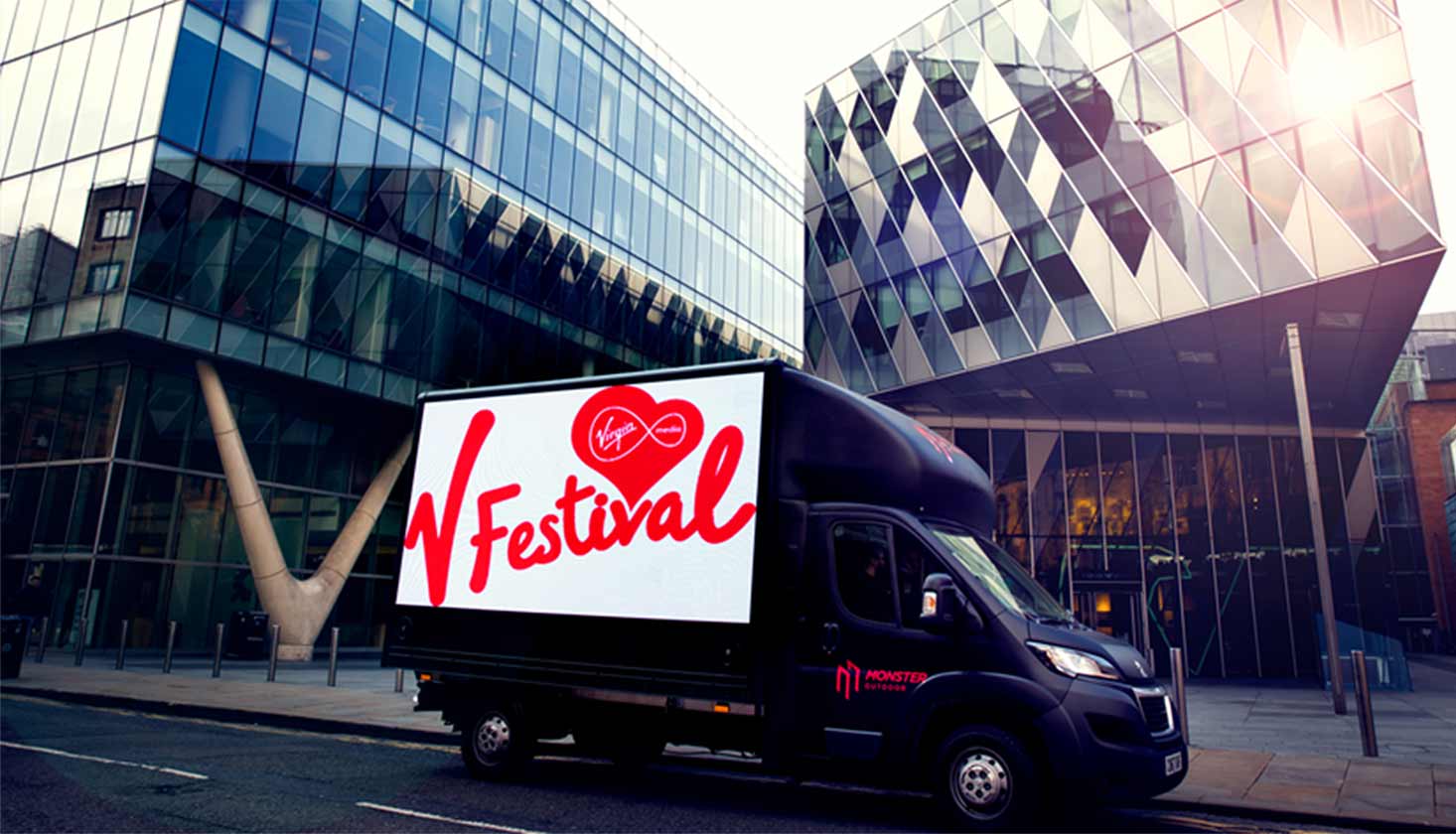
Across the UK, we’re seeing a clear trend: brands that used to spend their OOH budget on static billboards are moving more of that budget toward digital ad van campaigns. Here’s why.
1. Better attention in a distracted world
A moving screen playing video content is inherently more attention-grabbing than a static poster. Studies consistently show that motion and light attract the human eye. A digital advertising van leverages this biological response to demand attention in busy environments.
2. Social media amplification
People film digital ad vans and share them on social media. It happens on almost every campaign we run. A striking LED van driving through a city centre is unusual enough to generate organic social content, effectively giving you free bonus impressions on top of the street-level exposure.
3. Campaign agility
Marketing in 2026 moves fast. Product launches get moved forward. Events change venue. Budgets get approved at the last minute. A digital ad van can be booked, briefed, and deployed in days. Billboard campaigns typically need weeks of lead time for planning, printing, and installation.
4. Full ownership of the screen
With a digital ad van, you own 100% of the screen for the entire campaign. With digital billboards (DOOH), you’re sharing the screen with up to five other advertisers. Your ad might display for 10 seconds out of every 60. That’s a big difference in impact.
5. Genuine ROI measurement
The GPS tracking, photo evidence, and route verification that come with every digital ad van campaign mean you can genuinely measure what you got for your money. For marketing teams that need to report ROI to leadership, this is a game-changer.
Frequently Asked Questions
How much does a digital ad van cost compared to a billboard?
A digital ad van typically costs £800 to £2,000 per day, with no minimum booking period. A traditional 48-sheet billboard costs £200 to £1,000 per fortnight, but you also need to pay for printing (£100 to £300+) and installation. When you factor in total costs and the geographic reach each format delivers, a digital ad van often provides better value per impression. Check our full pricing guide for more detail.
Can a digital ad van reach more people than a billboard?
Yes. A single digital ad van driving a planned route through a UK city can generate 50,000 to 100,000+ impressions in one day. That’s comparable to or better than a two-week billboard booking, and it covers a much wider geographic area because the van is constantly reaching new audiences rather than relying on the same commuters passing one fixed spot.
What kind of content can I display on a digital ad van?
Virtually anything digital. Full-motion video, animation, motion graphics, anamorphic 3D content, static images, countdowns, and dynamic messaging. You can rotate multiple creatives throughout the day and swap content mid-campaign at no extra cost. Our Digital AdVan page has examples of what’s possible.
How do I know where the digital ad van actually went?
Every campaign includes a full proof-of-execution (POE) pack with GPS tracking data, a visual route map, timestamped photos at key locations, and video footage. You get complete transparency on where your ad was displayed and when.
Are traditional billboards still worth it in 2026?
They can be, for the right campaign. If you need a long-term, always-on presence in one specific location (like a busy junction near your business), a billboard is still a solid choice. But for launches, events, multi-city campaigns, or anything that needs video content and verifiable results, a digital ad van delivers more impact and better accountability.
How far in advance do I need to book a digital ad van?
We can turn campaigns around in as little as a few days, depending on availability. That’s a major advantage over billboard advertising, which typically requires several weeks of lead time for site booking, printing, and installation. For the best availability, we recommend booking at least one to two weeks in advance. Browse our campaign packages to see what’s available.
The Verdict: Digital Ad Van vs Traditional Billboard
Both formats have a role in outdoor advertising. But if you’re comparing them head-to-head on cost efficiency, reach, targeting, creative possibilities, and measurement, the digital ad van wins on almost every count.
Traditional billboards still work for simple, long-term, single-location campaigns. But for brands that want flexibility, accountability, and the kind of visual impact that gets people reaching for their phones to film your ad, a digital advertising van is the smarter investment in 2026.
Ready to See the Difference?
Mobile Billboards operates the UK’s largest digital ad vans, including our flagship 35sqm unit with dual high-resolution LED screens. Whether you’re planning a product launch, an event activation, a multi-city tour, or a targeted local campaign, we’ll build a route and package that delivers real results.
View our packages or get a free quote today and find out what a digital ad van campaign could do for your brand.